
The early childhood period, which we call the 0-6 age range, is a period when most of human development is completed. Early childhood is the starting point of human development. Preschool education supports the child’s developmental areas and allows them to be more productive and efficient in adulthood and to reveal their existing potential more easily, in other words, to discover themselves.
According to many studies, it is shown that children who receive preschool education have higher academic success and school attendance. Despite this, although this rate has decreased in recent years, preschool education is still not considered important and defended by many families and is considered an institution where working mothers send their children.
Importance of preschool education
Researchers who touch on the importance of the first five years of life today emphasize that these first years determine what kind of an individual a person will be in the future. Therefore, the education to be given in the preschool period should not be left only to the people in the family or to those who do not have sufficient knowledge.
No matter how well these people take care of their children and how much they care; children need well-educated educators in this field, educational programs prepared by educators and play environments where they can socialize with their friends.
The pre-school period is the most important stage in children’s mental and spiritual development. Because children complete 50% of their mental development until the age of 4, 30% between the ages of 4-8 and 20% between the ages of 8-17. We see from this rate that the age of 0-6 is the time when the child’s development is rapidly directed.
Wrong practices during this period can leave big marks on the child’s future life. Because the solid foundation to be established in this age range will increase the child’s chances of developing himself in many areas in his future life.
Benefits of Preschool Education
The benefits of preschool education and the necessity of this education are now known to everyone. Many families are looking for the best education for their children in McKinney. Every experience that children encounter is a learning opportunity for them.
The benefits of preschool education and the necessity of this education are now known by everyone. Many families have reached this awareness and are looking for the best education for their children. Every experience that children encounter is a learning opportunity for them. Preschool education also multiplies these learning experiences.
Scientific research also shows that the most permanent learning period for children between the ages of 0-6 is and learning is very fast during this period. Behaviors acquired in the pre-school period continue throughout life. For this reason, a quality preschool education plays a very decisive role. So what are the benefits of preschool education? We can talk about some of these benefits as follows;
👧 Early Socialization: How Preschool Prepares Children to Build Confidence and Friendships
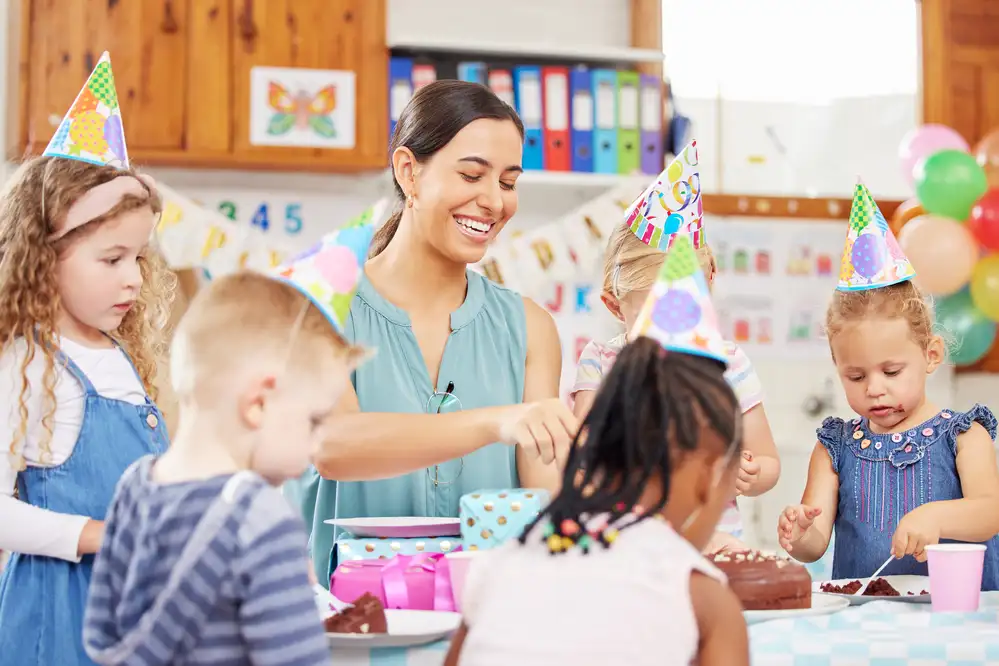
A fundamental element is that the child socializes with people outside his or her family in a safe environment. As parents, we intuitively understand that it is important to introduce our children to other children and to support their transition into groups where they will form friendships.
The earlier we provide our children with socialization, the better it is for them to overcome shyness and gain self-confidence. If we leave socialization to a later time, we hinder children’s social development. Children become socialized thanks to preschool education.
🤲 Learning to Share and Cooperate: Key Social Skills Taught in Preschool
It is very important for the child to learn how to share, cooperate and be encouraged in a safe learning environment under the guidance of well-intentioned professionals. This stage (learning to share) can be challenging for children without siblings, but it is important to learn this at an early age.
🌟 The Enthusiasm of Lifelong Learning
Teachers deliver lessons in a fun and exciting way that encourages children to become effective learners.. Children should have an enthusiasm and thirst for learning. The love of education – reading, learning, exploring – is ingrained in preschool education.
🎓 Convey the Value of Education Through Experience
It is important for children to learn and understand the value of education by taking someone as their role model and providing real experiences. Mothers and fathers will certainly have a huge impact on their children’s lives.
At the same time, it is also very necessary and important for families to provide their children with environments where they can develop themselves, experience what they have learned, and gain new perspectives. This also shows that families care about their children’s education.
🙌 Teaching Respect and Responsibility in a Shared Preschool Environment
Teaching respect for others. This is not limited to people and things, but also the environment. There is no better place to learn this virtue than in a preschool environment where everything is shared and enjoyable behaviors are both taught and learned organically.
🤝 Building Teamwork and Cooperation Skills Through Preschool Activities
Understanding and teaching the importance of teamwork, respecting others’ opinions, listening, cooperation and equality. Many preschool activities are centered around teamwork. A person who learns how to work on a team at an early age will ultimately be more socially adaptable and flexible.
🧠 Building Resilience in Preschool: Helping Children Manage Emotions and Overcome Challenges
It is important for preschool educators and parents to work together to build children’s resilience as much as possible. By creating a consistent, safe, and fair social environment with clear expectations and predictable consequences, children can develop the skills needed to manage themselves and their emotions.
Teachers can create a challenging environment where children can learn through firsthand experience. Children may struggle, or they may lose a game from time to time, but this provides the basis for planning coping strategies for the bigger challenges in life.
🧠 Nurturing Creativity and Focus: How Preschool Builds Critical Life Skills
During preschool, children discover new opportunities, new friends and new environments at every opportunity. Therefore, their minds are very lively and creative. As educators, we must balance this intensity with the ability to participate in group activities while developing the critical life skills of listening, following directions, participating in tasks, and concentration.
🕰️ Developing Patience and Turn-Taking Skills Through Preschool Social Experiences
Every day as adults, we encounter situations where our patience is tested. Children need to be involved in ample social experiences where they can explore and practice their social skills. Through role modeling and social experiences, children develop patience and learn to wait their turn. Examples include waiting to get a teacher’s attention, sharing a toy or play area, or engaging in a game.
🌈 Building Confidence and Self-Esteem Through Positive Preschool Experiences
A strong sense of well-being provides confidence, optimism and self-esteem, which will encourage children to explore their talents, skills and interests. Positive interactions with other children and teachers will foster a positive, healthy and secure regard that will enable children to approach situations and problems with confidence throughout their lives.
🌍 Fostering Diversity and Inclusion: How Early Education Shapes Respect for Differences
Giving importance to difference and diversity at an early age is very important in a child’s development. Early education guides children to appreciate and accept differences and contributes to society in many ways. It is important for children to understand that everyone is unique and special in their own lives with their own culture, beliefs and ethnicity.
Kindergarten is about much more than just playing. While the basic educational benefits of kindergarten (such as literacy and numeracy) are tangible, the development children make toward becoming well-rounded individuals is truly invaluable.
🎓 Boosts Academic Success and Future Career Paths
Pre-school education improves children’s academic success. A study found that children who received pre-school education were more likely to choose academic careers than those who did not.
The research shows that the educational experience a child receives at home while they are under five really does matter for their academic success later on. Unfortunately, not all children receive the same support from their families, which makes pre-school education particularly important for children.
➡️ Children between 0-6 years of age;
- ✅ He learns the love he needs to live and to have a happy and hopeful outlook on life.
- ✅ He gains something very important that will bring him success in the future: self-confidence.
- ✅ He discovers his talents that will help him in every period of life.
- ✅ He/she develops the ability to share, which allows him/her to be together with his/her peers.
- ✅ He is learning to express himself instead of being aggressive or introverted.
- ✅ He/she is developing the healthy communication skills that he/she will need most throughout his/her life.
- ✅ Pre-school education aims to provide the child with all of these needs.<<
Ready to Give Your Child a Head Start?
The Key Takeaway: How Preschool Education Builds a Strong Foundation for Lifelong Success
Our findings prove that an investment in pre-school education for children from disadvantaged backgrounds will make a tremendous contribution to their academic life. Children should never be forced to do lessons or games they do not want. Giving children a choice in activities is beneficial for their self-confidence and allows them to make their own decisions.
At Stonebridge Academy in McKinney, TX, we offer an education that takes all these factors into consideration. We create a learning area where our children can be free without any pressure. We also teach our lessons not only in indoor environments but also in outdoor playgrounds. With our natural grass areas and wooden toys, we offer our children a rich learning environment.
Frequently Asked Questions (FAQs) About Preschool Education
What are the key benefits of enrolling my child in a preschool like Stonebridge Academy in McKinney, TX?
Enrolling your child at Stonebridge Academy provides numerous benefits including early socialization, development of critical life skills, emotional resilience, and academic readiness. Our certified educators use play-based and structured learning approaches to nurture confidence, creativity, and cooperation in a safe and stimulating environment.
How does preschool education impact my child’s academic success later in life?
Research shows that children who attend quality preschool programs, like those at Stonebridge Academy, are more likely to excel academically and pursue advanced education. Early childhood education lays a strong foundation for literacy, numeracy, and lifelong learning habits critical to future school success.
Why is early socialization important for children attending preschool in McKinney?
Early socialization helps children build friendships, develop communication skills, and overcome shyness. At Stonebridge Academy, children interact with peers in a supportive setting that fosters sharing, teamwork, and emotional regulation—skills that are essential for healthy personal and academic growth.
What makes Stonebridge Academy’s preschool program stand out in McKinney?
Stonebridge Academy offers a Texas Rising Star certified program with experienced educators, individualized learning plans, and a rich indoor/outdoor learning environment. We emphasize respect, responsibility, and inclusion, ensuring children develop holistically with personalized attention and family involvement.
How can parents stay involved and informed about their child’s preschool progress?
At Stonebridge Academy, we prioritize transparent communication through daily reports, parent-teacher conferences, and open-door policies. Parents receive regular updates on their child’s development, social interactions, and milestones to stay actively engaged in their learning journey.