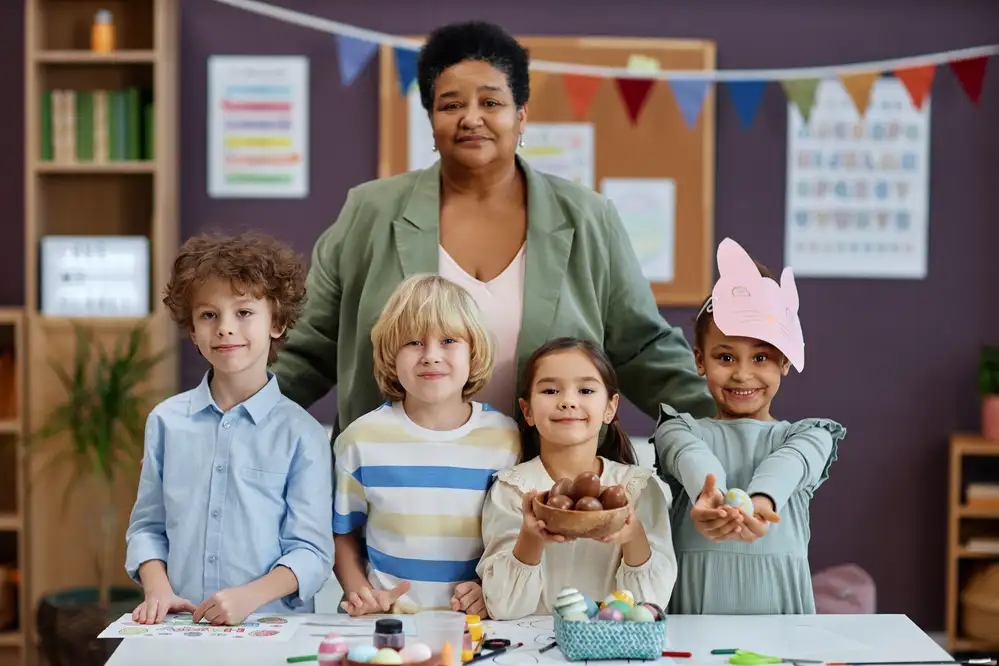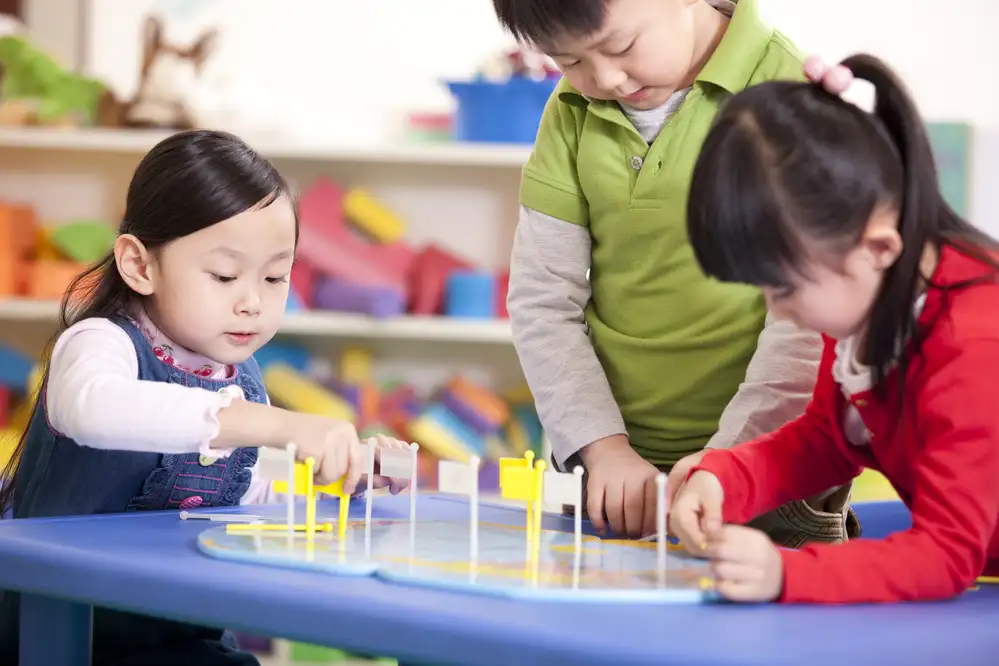

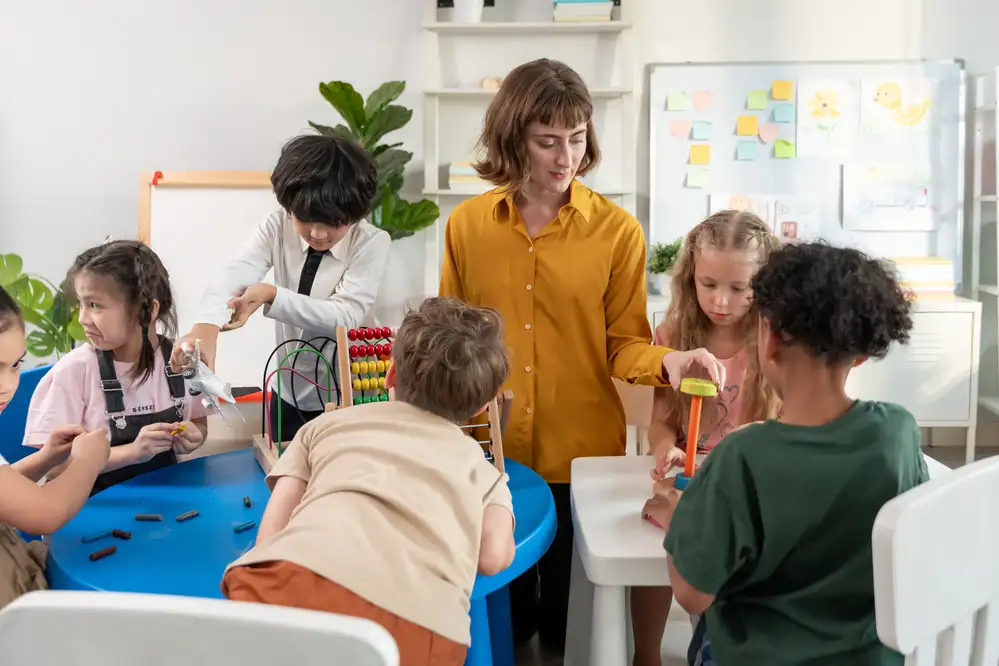
Kindergarten is not only a place where children play during the day, but it also provides many social, educational, learning, emotional, and health benefits that can help children throughout childhood and into adulthood.
An early childhood center and preschool can be a crucial support system for many parents when it’s time to return to work and continue their careers. However, preschools are more than just a place to be, they have also been proven to be extremely beneficial for early childhood development.
Group play and one-on-one time are certainly beneficial for early childhood learning, but how do early childhood centers specifically benefit development?
Long-term Benefits Of Early Childhood Education In Kindergarten
Preschoolers are a time full of energy, wonder, and magic. When creating a program for a child, it is important to remember that each child develops at their own pace and may respond to learning experiences in different ways. As teachers, we should take the time to get to know each child and their interests, and appreciate their unique characteristics because what works for one child may not work for another.
1. Knowledge And Social Development
The first five years of a child’s life are crucial for their development, as the foundations are laid for future thinking, behavior and emotional well-being. Early childhood learning environments allow children to learn through play, which promotes language and emotional skills, as well as the development of creativity and imagination.
📘 Children Learn Best Through Child-led Programs And Ongoing Learning
As a child’s learning expands, the environment plays a key role. The richer the environment, the more opportunities a child has to learn by interacting with materials and people. Preschoolers reinforce what they learn from these early experiences.
🎲 Learning Through Play at Preschool
While it may seem like your child is having a great time playing at preschool, the supportive and caring staff know what learning is important for your child’s development and make sure that every toy and game provided helps them grow and learn.
🧩 Building on What Children Already Know
Children learn most effectively when the learning opportunities you provide are informed by their knowledge and experiences. All children come to the preschool program with some level of knowledge in literacy, math, and science. Being able to learn from what they already know helps them feel capable and excited about learning.
2. Improved Social Interactions
Exposing your child to group learning early in life helps them develop a strong emotional sense that will help them form healthy relationships in the future. It also teaches them how to interact with children and adults from all backgrounds and builds the social skills needed to form friendships and build healthy relationships with teachers.
🗣️ Developing Social and Communication Skills
Children need to learn how to approach other children, how to negotiate problems, how to take turns talking, and how to communicate effectively. Children who are able to develop and maintain friendships are more likely to have successful and productive lives as adults.
💖 Building Strong Emotional Foundations for Life
These skills are important not only for the rest of their education, but also for their adult years. Laying these foundations early on will help your child make healthy emotional choices and build healthy relationships throughout their lives.
🌟 Help your child thrive!
3. Improve Academic Performance
Research found that children who receive at least one year of early childhood education are more likely to do well in primary school. Promoting early intellectual development can help children develop better literacy and numeracy skills later in life.
This doesn’t just mean that children will find their Year 3 maths homework easier, research also shows that children who receive early childhood education are more likely to complete High School Certificate and are more likely to go on to college.
📚 Laying the Foundation for Future Academic Success
Early academic skills related to literacy and mathematics are the most important predictors of future academic achievement. Important early literacy predictors for reading and school success include letter knowledge, phonemic awareness, rapid automatic naming of letters or numbers, rapid automatic naming of objects or colors, writing and phonemic memory.
Some studies suggest that early mathematics skills measured in Pre-K, particularly those related to counting and number sense, can predict reading, mathematics, and science achievement in later years.
📝 Admissions now open in McKinney, TX! Help your child develop strong early literacy and math skills for a brighter future. FREE Registration – Contact us.
🧩 The Role of Social Skills and Self-Regulation in Academic Growth
Early social skills and self-regulation in children also help them succeed in school. Some studies have shown that early social skills are linked to later literacy success.
Learning-related skills have been proven to impact middle school reading and math scores.
👐 Hands-On Discovery: The Best Way Young Children Learn
Learning for children at this age is best achieved through hands-on, meaning-driven interactions where children discover properties of objects before being asked to apply their knowledge. For example, allow children to interact with pipes, funnels, and water before expecting them to solve problems about how to get water from a bucket on the ground to the water table. Learning at this age is not about memorization, but about discovering new things.
🎓 Kindergarten: Building Skills and Benefits for a Lifetime
Kindergarten is not only a place where children play during the day, but it also provides many social, educational, learning, emotional, and health benefits that can help children throughout childhood and into adulthood.
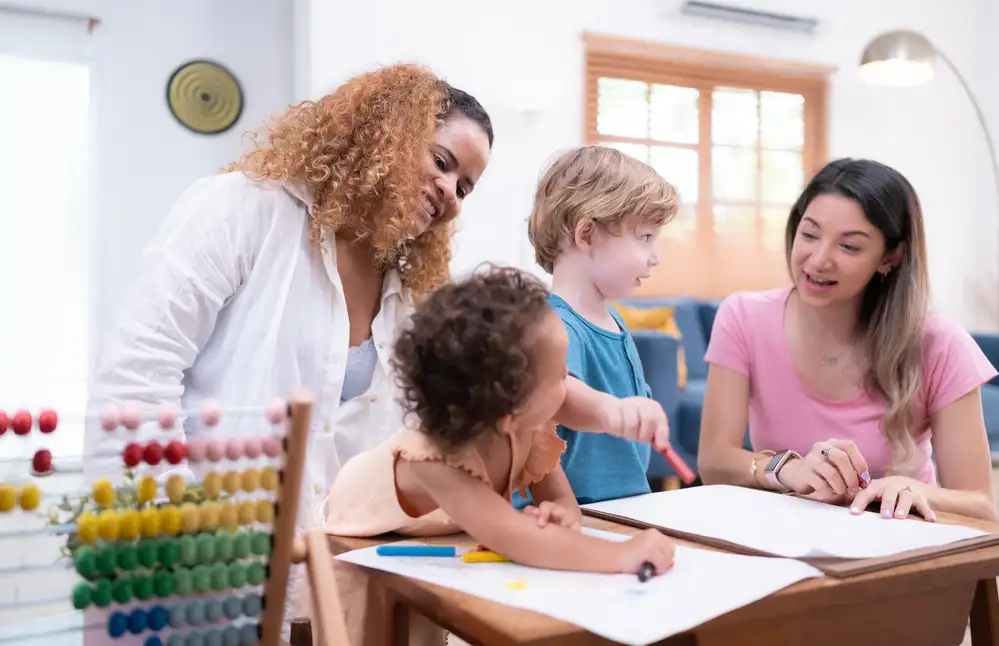
Kindergarten vs. Preschool vs. Home-Based Learning: Which is Best for Your Child?
Choosing the right early childhood education program is essential for your child’s growth and future success. Here’s how kindergarten, preschool, and home-based learning compare across key areas:
Aspect | Kindergarten | Preschool | Home-Based Learning |
Learning Style | Structured, teacher-led with play-based activities | Semi-structured, focus on exploration and social skills | Flexible, parent-led, may lack consistent curriculum |
Social Skills | Daily interaction with peers, group activities, teamwork | Socialization through small groups and guided play | Limited social interaction, mostly with family |
Academic Readiness | Emphasizes literacy, math, STEM, and school preparedness | Introduces early literacy and numeracy, encourages curiosity | Depends on parent involvement, may be inconsistent |
Teacher Guidance | Certified teachers monitor growth and provide individualized support | Trained caregivers guide learning and social development | Parents act as the primary teacher, may lack formal training |
Independence & Confidence | Encourages independence through structured routines and responsibilities | Supports confidence through guided activities and small group projects | Varies depending on home environment |
Transition to Elementary | Smooth transition with strong readiness skills | Prepares children socially and emotionally for school | May require extra support for school adjustment |
✅ Conclusion: While all three options provide valuable learning opportunities, kindergarten offers the most balanced approach, combining structured academic preparation, social skill development, and hands-on experiences. Preschool is ideal for exploration and socialization, while home-based learning works best when supplemented with social and educational activities.
Key Benefits of Early Childhood Education and Kindergarten
- 📚 Promotes early literacy and numeracy skills;
- 🗣️ Builds strong social and communication skills;
- 💖 Encourages emotional development and self-regulation;
- 🎨 Fosters creativity, imagination, and problem-solving;
- 🤝 Supports healthy friendships and positive relationships;
- 🌟 Develops confidence and independence;
- 🏫 Enhances school readiness and academic performance;
- 👐 Provides hands-on, discovery-based learning opportunities;
- 🧠 Strengthens cognitive development through play and exploration;
- 🚀 Lays a strong foundation for lifelong learning and success;
- 🎒 Prepares children for smooth transition into elementary school;
- 🥗 Supports overall health, well-being, and emotional growth.
Why Early Childhood Education and Kindergarten Matter for Lifelong Success
Early childhood education and kindergarten provide children with the skills, confidence, and emotional foundation they need for future success. Through structured learning, social interaction, and hands-on experiences, children develop academically, socially, and emotionally. Enrolling in a quality program ensures your child is prepared for school and life, building a strong foundation that lasts a lifetime.
FAQs About Kindergarten and Early Childhood Education
What are the benefits of enrolling my child in kindergarten?
Kindergarten provides children with social, emotional, and academic benefits. It promotes early literacy and math skills, fosters creativity, encourages social interactions, and prepares children for a smooth transition into elementary school.
How does preschool differ from kindergarten?
Preschool focuses on early exploration, play-based learning, and socialization, while kindergarten includes a more structured curriculum with teacher-led lessons that cover literacy, numeracy, STEM, and school readiness skills.
Can home-based learning replace preschool or kindergarten?
Home-based learning is flexible and can provide early development opportunities, but it may lack consistent social interaction and structured academic guidance. Combining home-based learning with group programs ensures a more balanced approach.
How do kindergarten and early childhood programs support emotional development?
These programs teach children self-regulation, problem-solving, and communication skills. By interacting with peers and participating in guided activities, children learn to build healthy relationships and manage emotions effectively.
Do kindergarten programs improve future academic success?
Research shows that early exposure to literacy, numeracy, and hands-on learning in kindergarten is linked to higher academic achievement in primary school and beyond. Early childhood education also improves school readiness and confidence.
Why is play-based learning important in early childhood?
Play-based learning allows children to explore, experiment, and discover concepts at their own pace. It strengthens cognitive, social, and emotional skills and makes learning meaningful and enjoyable.
How do social skills learned in kindergarten impact the future?
Children who develop strong social skills early are better at forming friendships, resolving conflicts, and collaborating with others. These skills support long-term success in school, work, and personal relationships.
What is the ideal age for starting kindergarten?
Most children start kindergarten around ages 4-6. Early enrollment ensures they receive foundational skills in literacy, math, and social-emotional development before entering elementary school.