
🤔 Is It Time? The Big Pre-K Question
Your child has developed and matured so quickly, and it seems as if only a few short months ago you were teaching your child to walk, but here you are now asking yourself if it is time to make the big leap into Pre-K for your child. This question is frequently asked by parents.
Parents want to set their children up for success but also have genuine doubts about sending their children to school. Is this the right age? Is this the right time for my child to be in a classroom for 8 hours a day?
Making the decision to send your child to a formal learning environment is certainly not an easy choice. There is no defined age that you can say is the perfect time for your child. When starting your child in a formal learning environment has to do more about understanding the developmental milestones in your child’s life, rather than just calculating age.
If you’re searching for Pre-K schools near McKinney, TX, you are already starting your thought process on this very important milestone in your child’s life. Stonebridge Academy has helped thousands of children make the leap into Pre-K, and this resource will outline five proven signs that indicate that your child is ready for a Pre-K program in McKinney.
1. Growing Independence and Self-Care Skills
Your child’s increasing interest in doing things “by myself!” is one sign they are ready for Pre-K. Although your child still needs assistance with many activities, you should notice an increased desire on their part to try and accomplish some tasks on their own. This shows that your child is ready for a little more structure in their daily routine.
When children enter into a Pre-K classroom, their teacher will provide an educational environment which promotes independence or self-sufficiency. This helps the child develop self-esteem and enables the teacher to spend time with children in relation to learning activities.
What to look for:
- Using the Bathroom: Can your child tell an adult when they need to go? Can they handle most of the process on their own, like pulling up their pants and washing their hands?
- Eating and Drinking: Can they use a fork and spoon? Can they drink from a regular cup (not a sippy cup)?
- Following Simple Instructions: Can they follow two-step directions, like “Please put your toy away and come sit on the rug”?
Children demonstrate certain skills associated with development, and parents can be reassured that their child is on the right path even if he or she has not achieved all of these milestones as yet! A high-quality Child Care McKinney, Texas program will help your child establish these important life skills!
Independence Skill Check
Skill | “Getting There” Stage | “Ready for Pre-K” Stage |
Dressing | Can pull on pants but struggles with buttons. | Can put on a jacket and attempt zippers/buttons. |
Cleaning Up | Will help put toys away with reminders. | Can clean up their own small messes or area. |
Bathroom | Needs reminders and some help. | Can manage most steps independently. |
2. Developing Social Skills and Interest in Others
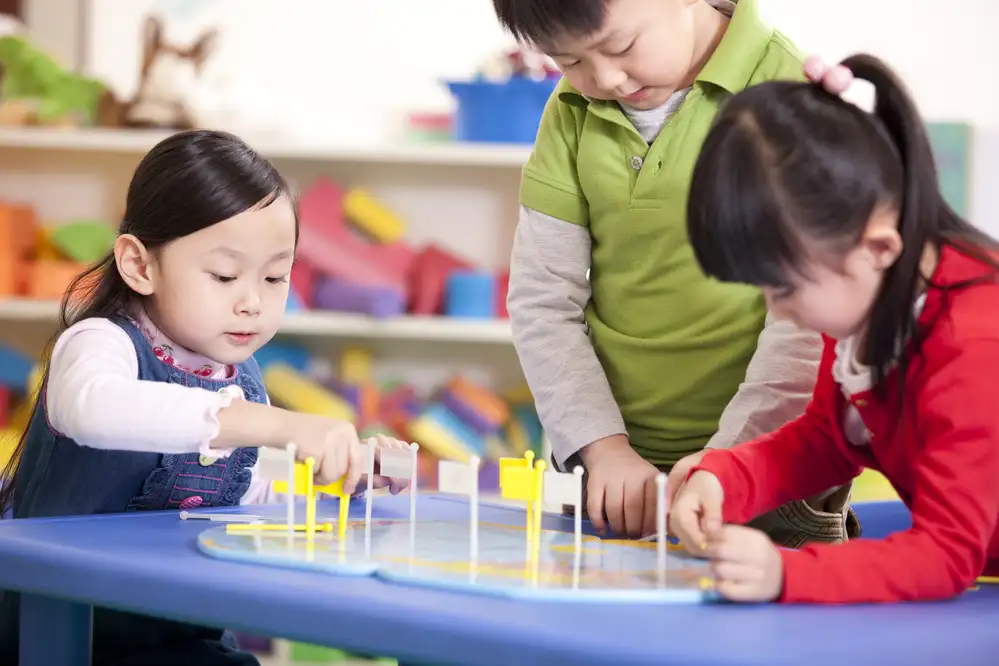
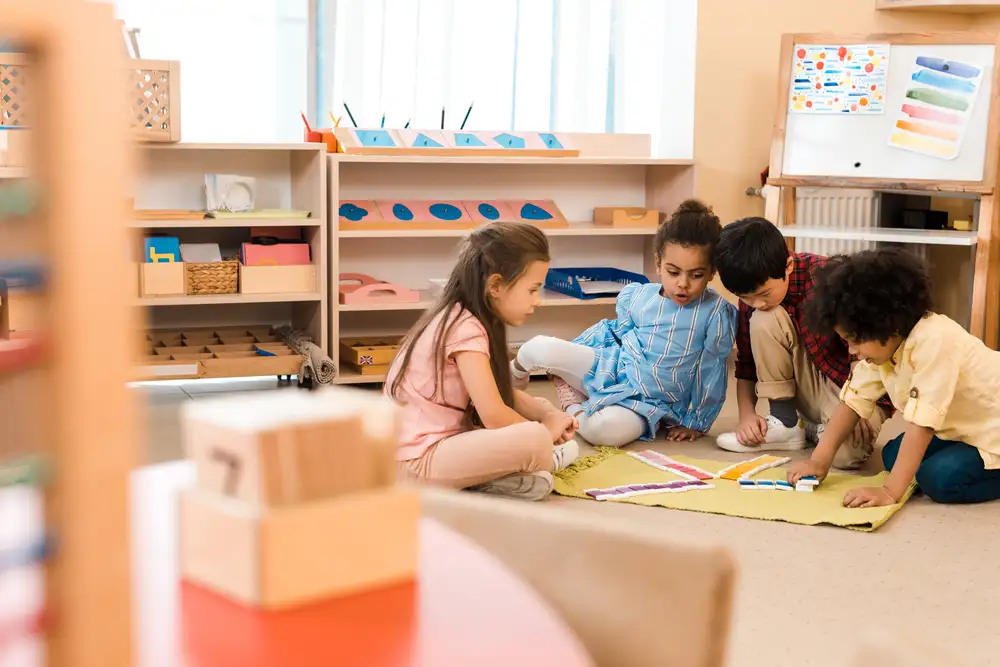
Does your child play with other children instead of playing next to them? This indicates a large developmental change and is an important milestone in your child’s journey to being ready for pre-k. While sharing may still be tricky for them, it is more important that they want to play with their friends.
Your child’s first true community is through Pre-K in McKinney. This is the place where they will learn to get along with others. They will learn how to take turns and to communicate about their disagreements and to be a good friend.
Signs your child is becoming more social:
- They talk about other children or ask for playdates.
- They engage in pretend play with others (e.g., “You be the doctor, I’ll be the patient”).
- They show empathy, like trying to comfort a friend who is sad.
- They can share, even if it’s just for a few minutes.
At Stonebridge Academy, our teachers are experts at guiding social development. We create a classroom environment where children learn to respect each other and work as a team.
3. Stamina to Last Through the Day
A typical day in Pre-K is a busy day with lots of activities including educational materials, games, meals and nap time! Typically, these activities require sufficient energy and stamina physically as well as emotionally in order for children to function well in a structured/ group setting outside of their own home and without their main caregiver.
One strong indication is napping; many children in this age group are moving away from having a mid-day (afternoon) nap. As long as your child has enough energy throughout the day to not be overwhelmed by tiredness or have a meltdown from an overwhelming amount of stimulation, this is definitely a good sign!
Consider these questions:
- Can your child separate from you without extreme distress? (A few tears are normal!)
- Do they have consistent energy levels throughout the day?
- Can they handle a change in routine without becoming completely overwhelmed?
Pre-K is planned in a manner that provides both high-intensity active play and quiet, restful activities throughout the day. This type of balance assists the children in managing their energy levels while building up the stamina required to sustain themselves over an entire day of learning and playing.
A Balanced Pre-K Schedule at Stonebridge
Time Block | Activity Type | Purpose |
Morning | Circle Time & Learning Centers | Engages the brain when it’s fresh. |
Mid-Morning | Outdoor Play | Gets wiggles out and builds motor skills. |
After Lunch | Quiet Rest Time | Recharges the body and mind for the afternoon. |
Afternoon | Art & Group Projects | Fosters creativity and collaborative skills. |
Help your child start their learning journey with confidence in McKinney
4. A Burst of Curiosity and Language
Does your kid like the question “why”? That’s so great! A child always asking questions clearly needs to learn more. Curiosity will help manage their growth and learning in the preschool class at Pre-K McKinney, perhaps better than a book!
You will also see a “language explosion.” Your child should be developing a greater vocabulary each day. They should also be able to communicate longer and more complex sentences. They are developing the ability to articulate their needs and wants using words instead of only through gestures or crying.
Look for these language and curiosity signs:
- They can speak clearly enough for a stranger to understand them most of the time.
- They can tell you a simple story about what they did that day.
- They show interest in books and ask to be read to.
- They love to ask questions about the world around them.
If you’re looking for a “Pre-K Near Me“, ask about the classroom library. All of the rooms at Stonebridge Academy are filled with books. Each time a question is asked, the teacher helps to build on the child’s knowledge and understanding of the world.
5. Ability to Focus for Short Periods
While it’s unreasonable to expect a preschooler to sit quietly for an hour listening to a lecture, a child that is prepared to enter Pre-K should be able to concentrate on a single task that they enjoy for a minimum of 10-15 minutes.
That could mean listening to a story, building a tower of blocks, or solving a simple jigsaw puzzle; developing the skill to concentrate is necessary for continued growth in school. Concentrating also indicates that their brain has matured enough to eliminate distractions while remaining focused on completing a task.
How to spot developing focus:
- They can sit through a short storybook without getting up.
- They will work on an art project until it is complete.
- They can engage in a single pretend-play scenario for several minutes.
As part of our Pre-K program, we will help your child build his or her “focus muscles” through various fun activities, practicing first in small groups and then increasing in time and size throughout the school year so that they are ready for the longer periods of concentration found in Kindergarten.
Focus Building at Home vs. Pre-K
Activity | At Home | In a Pre-K Classroom |
Story Time | One-on-one with a parent. | Group setting, learning to listen with others. |
Puzzles | Working on a puzzle alone. | Working with a partner, taking turns. |
Art | Coloring a picture. | Following a multi-step craft project. |
Conclusion: Stonebridge Academy is Ready When You Are
If you have clicked on the items listed above and have been nodding yes while looking through this list, then your child is ready for the exciting step into Pre-K. If they’re still developing some of these skills, that’s perfectly fine! It’s actually quite typical.
What you need to keep in the forefront of your mind is that the best Early Childhood McKinney programs will meet your child where he/she is at this moment in time. At Stonebridge Academy, the teachers are experienced at supporting each child’s unique journey toward independence, making their first friends, and developing a love of learning.
We hope you will come by to take a look around, ask us any questions you may have, and see if Stonebridge Academy is the best fit for your family! Together we will help prepare McKinney’s youngest children with the tools necessary for success in life!
Quick Contact Information
Contact Method | Details |
📍 Address | 1921 Grassmere Ln, McKinney, TX 75071 |
📞 Phone | |
⏰ Hours | Mon–Fri: 6:30 AM – 6:30 PM |
Call us today to schedule a tour and let’s get your child started on their educational journey
Frequently asked questions
What age should a child start Pre-K in McKinney?
Most Pre-K programs accept children around 4 years old, depending on the school’s requirements.
How do I know if my child is ready for Pre-K?
Signs include basic communication skills, social interaction, independence, and the ability to follow simple instructions.
How can I prepare my child for Pre-K?
You can prepare your child by establishing routines, encouraging social play, and practicing basic learning skills at home.